
At a certain point in working with leaders, the conversation shifts.
Strategy still matters, and I have worked with people who can hold extraordinary complexity, think across systems, and move quickly with incomplete information, but that is rarely the constraint.
The constraint shows up when conditions change, when timelines compress, stakes rise, conflict enters the room, and something important is at risk. In those moments, what determines how a leader functions is not what they know, but how their internal system responds under load.
This is where I keep bringing up meditation, not as a philosophy or lifestyle, but as training.
There is a category of practices that have existed across traditions for a long time. Different names and entry points, but they converge on the same underlying capacity.
If the terminology has ever felt confusing, it helps to see them side by side:
Mindfulness-based practices (including Mindfulness-Based Stress Reduction) train awareness of thought, emotion, and sensation as they arise, so you can see a reaction forming instead of being carried by it.
Transcendental Meditation uses a mantra to let the mind settle beneath constant thinking. It is less about effort and more about giving the system a level of rest most people do not realize they are missing.
Vipassana builds observational clarity through direct experience, often uncomfortable. You sit, you notice, you resist, you notice that too. It is simple. It is not easy.
Vedanta moves into identity. It points to the difference between who you are and everything you experience, which becomes relevant the moment your role, results, or reputation start to feel unstable.
Breath-based practices work through physiology. Change the breath, and the nervous system follows. It is one of the fastest ways to shift your state in real time, including in the middle of a meeting where you cannot exactly announce that you need a moment.
Different approaches, same function.
They train the ability to experience internal activity without immediately organizing behavior around it, and that capacity is structural.
Without it, a leader’s internal state becomes part of the system they are trying to manage, often in ways they do not see. Challenge is interpreted as threat, feedback becomes something to defend against, uncertainty narrows thinking, and conflict becomes something to resolve quickly rather than understand. From the outside, these look like interpersonal or strategic issues, but they are system responses.
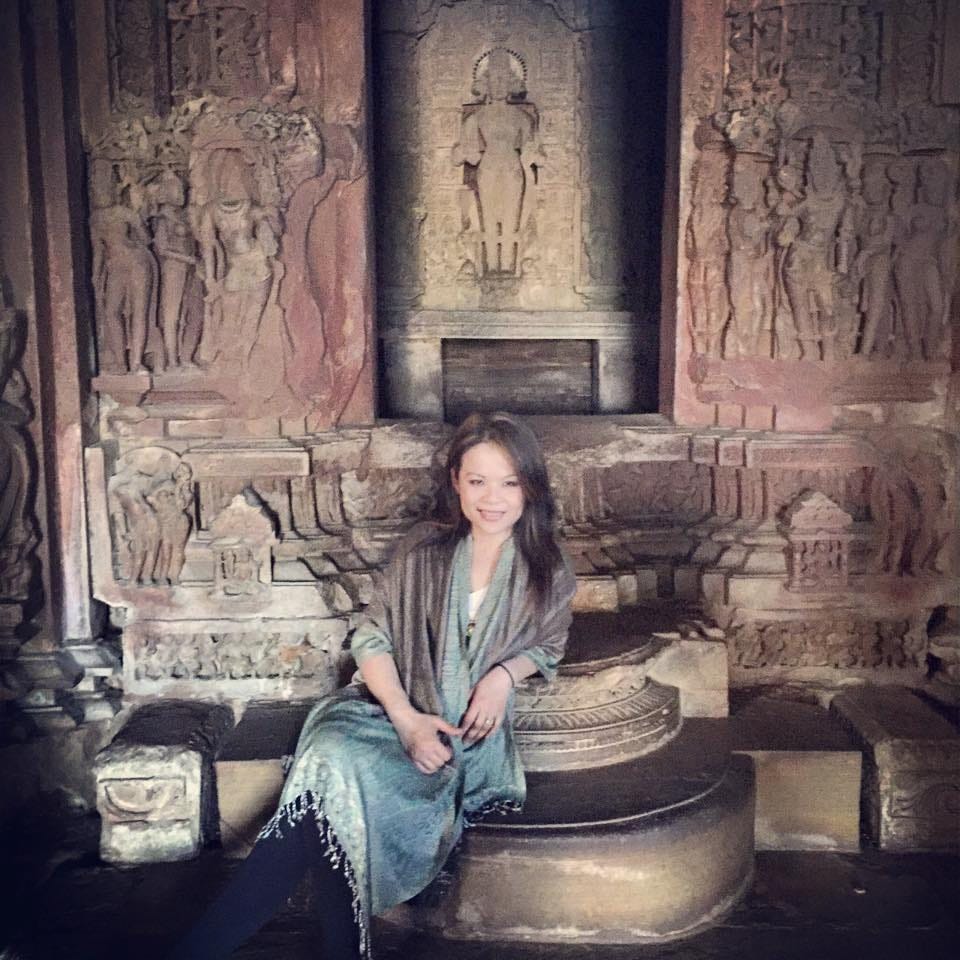
I spent a significant amount of time in India, in ashrams, with teachers, in environments designed to point you directly at what these traditions are actually about. Some of it looked the way people imagine, but the streets of Old Delhi were just as instructive. Heat, noise, movement, a kind of organized chaos that never really stops. It was not quiet, and yet something in you learns to quiet down within it, very different from the controlled calm of air-conditioned studios.
It was valuable, but it is not required.
You don’t need to step away from your life to build this capacity. It doesn’t require an off-grid pilgrimage or walking barefoot with a teacher, although I’ve done both. What changes the system is repetition, returning attention to what is happening in real time, allowing the nervous system to learn it doesn’t need to react to every signal, and gradually expanding what you can experience without being destabilized.
That expansion is what shows up in leadership.
It shows up in the ability to stay in a conversation that is not resolved, to hear something difficult without immediately responding, to hold multiple perspectives without forcing closure, and to make decisions without rushing to relieve internal discomfort. These are observable behaviors that shape how teams function.
There is a line often attributed to the Dalai Lama: if you have 20 minutes to meditate, meditate for 20 minutes, and if you are too busy to meditate for 20 minutes, meditate for an hour.
It reads as counterintuitive until you understand the system. As external demand increases, internal load increases, and without a way to regulate that load, the system compensates through reactivity, control, or avoidance, which then scale across teams and organizations. Meditation introduces a different feedback loop, where pressure is processed internally without losing coherence.
In organizational settings, this is more measurable than it sounds. What looks like presence or composure shows up in behavior: how a leader handles challenge, whether they can stay in conflict without escalation or avoidance, how quickly they move to defend or how long they can stay curious. These patterns are visible in real time, in meetings, in feedback loops, in how decisions are made under pressure.
They can be observed, assessed, and developed. Through targeted feedback, behavioral diagnostics, and consistent reinforcement inside existing workflows, organizations can track shifts in how leaders respond when stakes are high. Over time, those shifts show up in clearer decision-making, faster recovery from conflict, and more stable team performance under load.
This is why I keep bringing it up.
Not as an idea, but as one of the few direct ways to train the internal conditions leadership depends on.