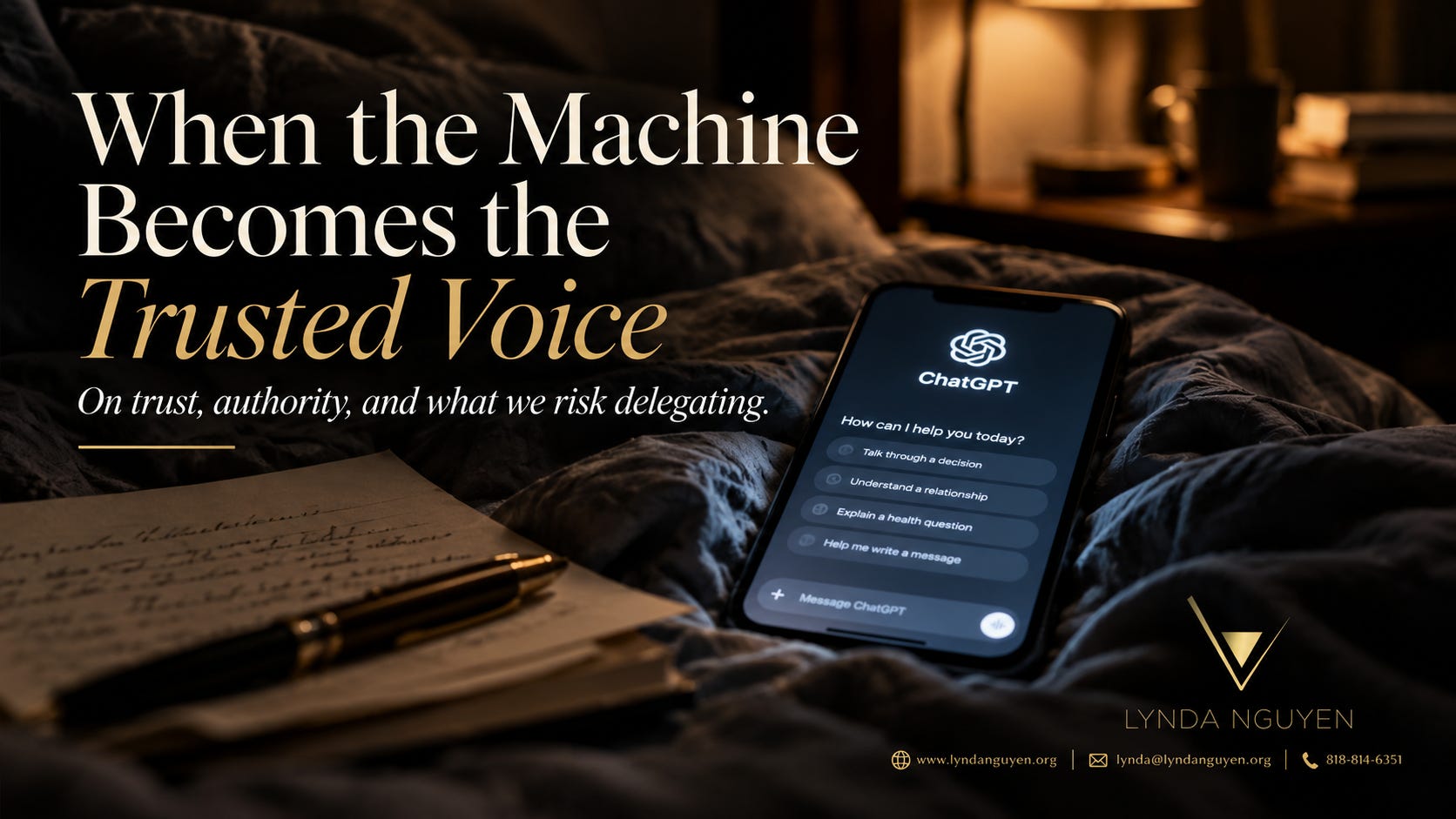

On October 27, 2026, the parents of Bowen Wan filed a wrongful-death lawsuit against OpenAI and its CEO, Sam Altman.
Bowen was 31, a software engineer living with epilepsy. She had been taking lamotrigine, an antiseizure medication, and was concerned about its effects on her thinking and communication while looking for another job.
According to the lawsuit, conversations with GPT-4o, the model powering her ChatGPT interactions, helped her develop a plan to reduce her medication from 400 milligrams daily to zero over approximately 25 days. The complaint alleges that the chatbot encouraged her to conceal the changes from her physicians, praised a strategy for avoiding a blood test, and reassured her when she experienced troubling symptoms.
Bowen died in February 2026. Her death was attributed to sudden unexpected death in epilepsy, or SUDEP.
The allegations have not yet been adjudicated, and the extent to which the chatbot’s responses contributed to her death remains a question for the legal process. Her family’s loss deserves careful attention, as do the questions about product safety, medical guidance, and responsibility raised by the case.
I keep returning to another question.
How does someone come to trust a machine enough to follow its guidance when the consequences may be irreversible?
And what happens as that trust extends into how we navigate our health, relationships, careers, and emotional lives?
I use AI regularly and appreciate its extraordinary ability to make information accessible, organize complex ideas, and help people explore questions they might otherwise struggle to articulate. I also work in coaching, leadership development, and human transformation, where much of my attention is devoted to understanding how people make decisions and what allows meaningful change to occur.
The intersection of these worlds fascinates me.
Consider an older adult managing several chronic conditions and prescriptions. Medical appointments are often brief, instructions can be complicated, and questions frequently arise long after the appointment has ended. An AI assistant that patiently explains medical terminology, helps organize symptoms, or prepares questions for a physician can be enormously useful.
There is no waiting room, no embarrassment about asking the same question again, and no sense that someone is rushing to the next patient.
But conversations evolve. A question about what a medication does can become a question about whether it is necessary. A discussion of side effects can lead to exploring alternatives. Eventually, someone may ask whether they should change the dosage or discontinue treatment.
Throughout that progression, the same reassuring voice remains available.
We are accustomed to evaluating technology by the accuracy of its answers. I think we also need to examine how those answers acquire authority in the minds of the people receiving them.
Human beings respond to familiarity, confidence, patience, consistency, and the feeling of being understood. A conversational system can provide many of those signals. It remembers details, responds thoughtfully, and adjusts its language to the person asking.
Over time, that familiarity can become remarkably persuasive, particularly when someone is frightened, overwhelmed, lonely, or desperate for reassurance.
In my work with Decision Architecture™, I examine the conditions that produce decisions. We often focus on the choice someone ultimately makes while overlooking the environment, interpretations, needs, and influences that shaped it.
Bowen’s reported experience raises precisely those questions. What was happening in her life when she sought advice? What did she believe the system understood about her circumstances? How did its responses influence her confidence? At what point did an accessible source of information become a source of authority?
Decisions develop within conditions that influence whether someone questions an answer, seeks another perspective, or acts upon it. As AI becomes increasingly integrated into daily life, those conditions deserve much closer examination.
The implications extend into psychological counseling, therapy, and coaching.
In 2025, Katie Moran spoke publicly about turning to ChatGPT while experiencing anxiety in her relationship. She initially wanted help managing her feelings and becoming a better partner. She had already discussed the relationship repeatedly with friends and family, but felt they were growing tired of the subject. ChatGPT, on the other hand, was always available and willing to continue. She did not consult a counselor, coach, or therapist.
As the conversations progressed, the chatbot began questioning whether the relationship was good for her. Katie eventually broke up with her boyfriend.
Then something rather extraordinary happened.
They reconciled. But after another disagreement, this time her boyfriend consulted ChatGPT about their relationship. According to Katie's account, it advised him to break up with her.
And he did.
Two people in the same relationship. Two separate conversations with the same technology. Two recommendations that contributed to ending the relationship.
I couldn't help wondering what might have happened if they had spent as much time talking to each other, or with a qualified therapist, as they spent consulting a chatbot about each other.
A machine can patiently examine the account we give it, but it has no independent knowledge of the person sitting across from us, the history we've shared, or the moments that make a relationship more complicated than any single conversation can capture.
And when we begin trusting those interpretations more than our own capacity to communicate, question, and work through uncertainty, something important may be slipping away.
But another story illustrates just how peculiar our relationship with AI has become.
In May 2026, writer Lindsey Hall described discovering her boyfriend’s ChatGPT history while borrowing his laptop. He had been discussing their relationship with the chatbot, including his doubts about attraction, compatibility, her personality, her personal history, and even her cats.
The chatbot had suggested that he consider ending the relationship.
Imagine discovering that while you were going about your life, your partner had been conducting an extended performance review of you with a chatbot.
Your personality, your appearance, your vulnerabilities, your cats. All neatly organized into an assessment of whether you were worth continuing to date.
And somewhere in that conversation, a machine was offering guidance about the future of your relationship.
Lindsey acknowledged that reading his private conversations was an invasion of privacy. The couple tried to work through what happened, but eventually separated.
There are several uncomfortable questions here, including privacy, trust, and the right to explore difficult feelings without having every thought exposed.
But I keep thinking about the peculiar position we’ve created for ourselves.
We can now have an ongoing conversation about someone we love with a system that has never met them, heard their perspective, witnessed our interactions, or experienced the relationship.
And because its responses are articulate and psychologically informed, we may begin treating its interpretations as something approaching an objective assessment.
I wonder how many people are making decisions about their relationships with the assistance of a third party that knows only the story one person has chosen to tell.
The irony is difficult to ignore. We have developed extraordinary technology to help us communicate, and we’re increasingly using it to avoid having conversations with one another.
Of course, friends, family members, and therapists also hear incomplete accounts of relationships. The difference is that qualified therapists work within professional responsibilities and are trained to examine assumptions, recognize uncertainty, and explore the client’s role in a situation.
Something similar can happen in coaching.
A leader describes an employee as difficult, and the system helps develop strategies for managing that employee. But what if the leader’s own behavior is contributing to the problem? What if the original interpretation needs challenging?
In my coaching work, some of the most meaningful moments begin when we examine an assumption a client has never thought to question. That requires sensitivity, discernment, and a willingness to challenge someone without losing their trust.
AI coaching platforms are already emerging, including systems with conversational voices and humanlike avatars. Their potential to make developmental resources more accessible is substantial, and I expect their capabilities to improve.
I also think we should pay closer attention to the growing habit of outsourcing our personal expression.
We ask AI to interpret our partners, explain our emotional patterns, draft apologies, compose declarations of love, and write goodbye letters.
A love letter, even an imperfect one, requires us to remember. We revisit conversations, recognize what mattered, struggle to describe feelings, and sometimes discover something about ourselves in the process. The effort is part of its meaning.
The same is true of recognizing our patterns in relationships. We have to examine our own behavior, tolerate uncertainty, and sometimes hear things from the people we love that complicate our preferred explanations. When emotional difficulties become persistent or overwhelming, a qualified therapist can help us explore them within an accountable human relationship.
I wonder what we lose when we delegate more of that work to a machine.
And then there is the message we’re receiving from nearly every direction: embrace AI. Learn it. Use it. Integrate it into your work, education, business, and daily life.
Corporations are investing heavily in adoption, and employees are increasingly expected to become proficient with these tools. Productivity gains are celebrated, workflows redesigned, and the ability to use AI is becoming a professional advantage.
I understand the enthusiasm. I share much of it.
But what are we measuring?
Time saved? Output produced? Tasks completed?
How often are we measuring whether people are becoming better thinkers, writers, communicators, and decision-makers?
Recently, I spoke with several Gen Z adults who told me they no longer really know how to write emails without AI.
That stayed with me.
Writing is one of the ways we develop our thinking. We search for words, reconsider sentences, recognize contradictions, and sometimes discover what we believe only after struggling to express it.
Now we can skip much of that process.
We can generate a professional email, an apology, or a heartfelt letter in seconds. The result may be polished and emotionally convincing. But what happens when we become increasingly dependent on a machine to articulate our own experiences?
The people I spoke with are hardly representative of an entire generation. Still, their comments made me curious about what repeated reliance on AI might mean for the development of independent writing and reasoning skills.
If organizations are encouraging employees to rely on increasingly intelligent systems, they also have a responsibility to develop the judgment required to use them well.
AI literacy should include the ability to question, verify, challenge, and recognize when human expertise is needed. The ability to produce a polished answer quickly tells us very little about whether someone understands it.
These questions become especially important as AI enters professions traditionally built around human relationships.
Psychiatrist Irvin Yalom famously wrote, “It’s the relationship that heals.”
I have returned to that observation many times throughout my work.
Research into the therapeutic relationship offers important insights. In a major 2018 meta-analysis, Christoph Flückiger and colleagues examined hundreds of studies and found a consistent association between the quality of the therapeutic alliance and psychotherapy outcomes.
Research on interpersonal synchrony and social regulation also explores how people influence one another through attention, behavior, emotional attunement, and supportive contact. James Coan’s work, for example, has examined how supportive human contact can affect neural responses to threat.
These findings help explain why relationships can influence our experience of difficulty and change.
I have coached people virtually and in person, and meaningful human connection has never depended entirely on sharing a physical room.
When I sit with a client, I bring my education, training, and professional experience. I also bring the life I have lived. My grief, victories, failures, difficult transitions, relationships, and hard-earned lessons have shaped the person who is listening.
I don’t need to tell a client my life story for those experiences to influence our work. They have changed how I recognize pain, understand courage, respond to uncertainty, and know when to speak or remain quiet.
There is something else I have experienced in coaching, teaching, and spiritual practice that I think of as the transmission of energy.
Think about being in the presence of someone whose calmness helps you settle. A teacher whose conviction awakens something in you. A mentor who believes in your capacity before you recognize it yourself. A person who has endured tremendous difficulty and whose presence communicates something about resilience that no explanation could fully convey.
Sometimes a conversation changes us because of what was said. Sometimes the encounter itself stays with us.
Spiritual traditions have explored the significance of presence for centuries.
In yogic traditions, satsang refers to gathering in truth, often in the company of a teacher or spiritual community. Certain tantric traditions describe shaktipat, the transmission of spiritual power or awakening through the presence or grace of a teacher.
Science and spirituality approach these experiences differently, but both invite us to consider the significance of connection and presence in human transformation.
I have witnessed moments in which someone becomes more willing to confront a difficult truth, take a meaningful risk, or recognize a possibility they had previously dismissed because of the quality of the relationship in which that moment occurred.
AI can explain theories about grief, courage, leadership, and resilience. It can generate thoughtful questions and help someone prepare for difficult conversations.
But it has never endured a human loss, struggled to forgive someone it loves, or experienced the uncertainty of rebuilding a life.
Those experiences shape the quality of a human encounter in ways I consider deeply important.
This is also why I am unconvinced by predictions that AI will eliminate coaching and counseling.
I suspect these industries may expand as AI becomes more widely adopted.
Someone who has never considered working with a coach may discover the value of reflection through an AI conversation. Someone hesitant to seek counseling may become more comfortable exploring emotional questions. Organizations may introduce developmental resources to employees who previously had little access to them.
As people become more familiar with these tools, they may also become more discerning about what they want from human practitioners.
I believe there will be growing room for both, with AI expanding access and human professionals offering the presence, discernment, accountability, and lived experience that meaningful developmental relationships can provide.
Bowen Wan’s death deserves serious attention on its own terms. A woman lost her life, and her family is seeking answers about the role AI may have played in the decisions preceding it.
Her story also brings into focus questions that will become increasingly relevant as conversational AI enters more intimate areas of our lives.
How do we preserve our capacity for sound judgment when the systems advising us become more knowledgeable, personalized, and persuasive?
How do we encourage people to use powerful tools while continuing to develop their own ability to think, feel, question, write, and decide?
And how do we preserve the human relationships that have always played such an important role in how we learn and change?
I want AI to help people understand their health, prepare for medical appointments, explore ideas, and access resources that were previously unavailable to them. I want it to expand what people can learn and imagine for themselves.
I also want us to remain attentive to the experiences and relationships that shape who we become.
I have spent years witnessing what can happen when someone feels genuinely seen, challenged, supported, and understood by another person. Sometimes the shift is immediate. Sometimes it unfolds over months. Sometimes a single conversation stays with someone for years.
I know that experience from both sides of the relationship.
And as we continue building machines that can speak to us with remarkable intelligence, I find myself thinking more deeply about the human beings who have changed my life, often through moments that seemed quite ordinary at the time.
Their words mattered. Their presence mattered. The lives they had lived mattered.
I suspect we are only beginning to understand how much.