
Most companies say they want authenticity. What they actually reward is control, composure, certainty, having the answer.
Over time, people adapt. They stay polished, stay safe, and don’t say the thing that might shift the room. It looks like professionalism, but it quietly shapes the culture.
I’ve seen this up close in high-stakes conversations, from mediating employment cases to facilitating dialogues across deep political divides with Braver Angels. People come in prepared with facts, positions, and certainty. But within minutes, it’s clear the real conversation isn’t about the facts.
One person feels disrespected. The other feels misunderstood or dismissed. Neither names it directly. So it shows up indirectly. Defensiveness. Escalation. Misalignment.
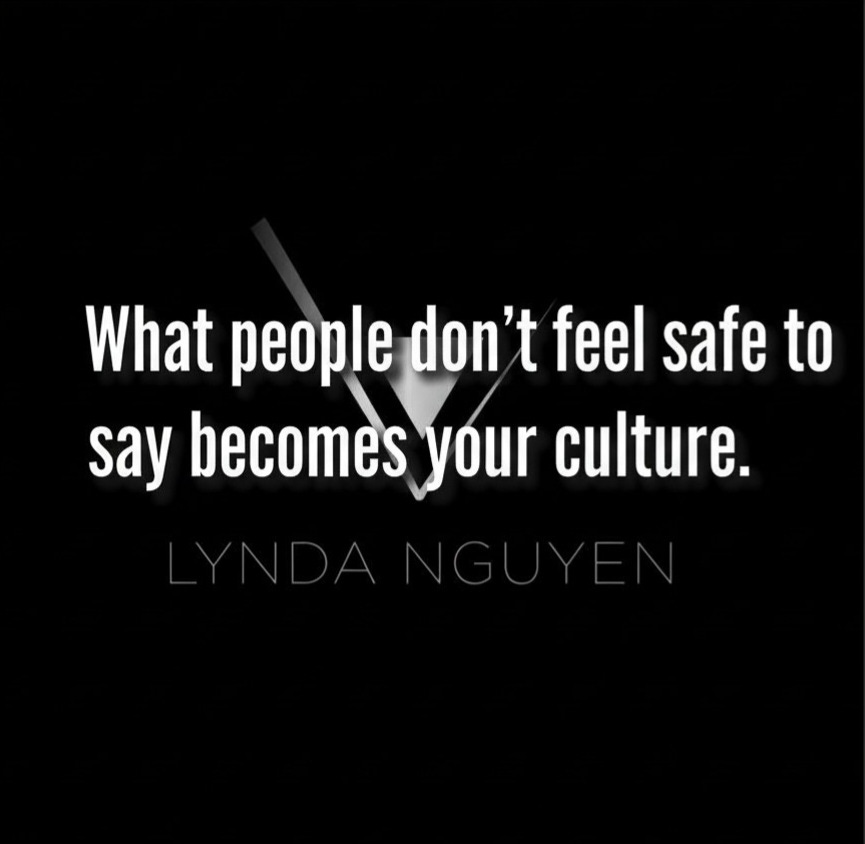
This is how culture gets built. Not from values statements, but from what people feel safe to say in real moments.
When leaders don’t model honesty, teams don’t become more aligned. They become more careful. And careful cultures have patterns: issues surface late, feedback gets diluted, risks are managed quietly, misalignment grows under the surface. People start managing perception instead of sharing reality.
In enterprise environments, that distortion compounds across layers. What starts small becomes a larger issue by the time it reaches leadership. In remote teams, it’s amplified. There’s less context, fewer informal corrections, and more room for silence to be misread, so things sit longer than they should.
In my executive training at Harvard Law School’s Program on Negotiation, one thing became clear. Difficult conversations are rarely about the surface issue. They’re shaped by identity, emotion, and perception. If those layers aren’t named, they don’t disappear. They shape behavior, decisions, and ultimately, culture.
Research backs this up. Google’s Project Aristotle found that the highest-performing teams weren’t defined by talent alone, but by psychological safety, the ability to speak up without fear of being shut down.
That’s what most organizations are actually trying to build. Not just engagement. Not just alignment. But a culture where reality makes it into the room early.
This is where vulnerability becomes practical. Not over-sharing. Not losing authority. Just being willing to name what’s real before it distorts everything else.
●“I don’t have the full answer yet.”
●“This isn’t landing the way I intended.”
●“Something feels off. Let’s slow this down.”
That level of honesty does more than build trust. It shapes the culture in real time.
Because culture isn’t what you say you value. It’s what people learn is safe to do.
And over time, this becomes a systems question. Not just what people say they value, but what actually gets reinforced in real moments. How quickly someone can raise something before it becomes a problem, whether leaders know how to stay in a hard conversation without shutting it down, whether feedback is clear or carefully diluted to keep the peace.
Culture doesn’t shift because people are told to be more open. It shifts when the day-to-day experience makes it safer to be honest than to stay silent.
When that happens, everything else improves. Decisions get better. Teams move faster. Execution gets cleaner.
The leaders who understand this don’t lose authority.
They build cultures that actually work.
And that’s what scales.