

Over the years, people have often described me in similar ways.
•Calm under pressure.
•Able to hold difficult conversations.
•Someone who can sit in the tension between perspectives without rushing to shut it down.
For a long time I didn’t think much about it. I assumed this was something most people could do if they tried hard enough.
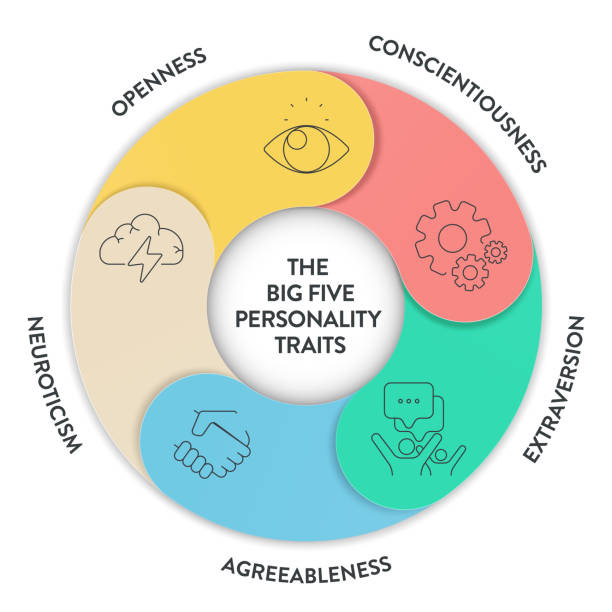
Recently I took the Big Five Personality assessment (also called the OCEAN model), one of the most widely used frameworks in psychology for understanding personality traits.
You can take the same free test here:
When my results came back, something clicked.
Not because the results were flattering — but because they explained patterns I’ve seen in my leadership work, mediation work, and even my relationships for years.
And you might recognize some of these patterns in yourself too.
The Five Traits (OCEAN)
The Big Five framework measures five personality dimensions:
●Openness to Experience – curiosity, creativity, intellectual exploration
●Conscientiousness – discipline, reliability, follow-through
●Extraversion – social energy, assertiveness, engagement with others
●Agreeableness – empathy, cooperation, desire for harmony
●Neuroticism – emotional reactivity and sensitivity to stress
Everyone has some of each trait. The question is simply where you fall on the spectrum.
My results looked roughly like this:
☆Low Neuroticism
☆High Extraversion
☆High Openness
☆Very High Agreeableness
☆Extremely High Conscientiousness
Reading through the interpretations helped me see long-standing patterns in my own life more clearly.
●Emotional Stability (Low Neuroticism)
One of my lowest scores was neuroticism, which in this model measures emotional reactivity.
In practical terms it means I tend to stay relatively steady when situations become stressful or emotionally charged. I don’t escalate quickly. I don’t spiral easily. My nervous system returns to baseline fairly quickly after conflict.
Looking back, I can see this pattern clearly.
•In difficult family moments.
•In leadership environments.
•In navigating grief and complex life experiences.
It doesn’t mean I don’t feel deeply. I do.
But I’ve always had an ability to remain grounded while others are overwhelmed, which often naturally puts me in the role of mediator, stabilizer, or translator between people.
Earlier in my life I sometimes did this out of fear or survival — trying to maintain harmony in environments that felt unpredictable.
Today it’s much more conscious.
●High Openness: Seeing Patterns Across Systems
Another strong trait in my results was openness to experience.
This trait reflects curiosity about ideas, systems, philosophy, and human behavior.
It’s probably why I’ve always been drawn to exploring connections between things like:
•leadership
•psychology
•nervous system regulation
•conflict resolution
•spiritual traditions
•culture and social dynamics
High openness often means someone is comfortable sitting with complexity and ambiguity.
Instead of needing immediate answers, they’re willing to explore the larger pattern.
If you’re someone who constantly connects ideas across disciplines or enjoys thinking about how systems influence human behavior, you may recognize this trait in yourself as well.
●High Agreeableness: Empathy — and the Shadow Side of It
Agreeableness reflects empathy and concern for other people’s wellbeing.
People high in agreeableness tend to:
•listen deeply
•consider multiple perspectives
•value fairness
•care about maintaining connection
For much of my life, this trait expressed itself somewhat unconsciously.
When you’re highly agreeable — especially earlier in life — empathy can sometimes show up as conflict avoidance or emotional caretaking.
Not because you’re weak.
But because your nervous system is wired to protect connection.
In environments that feel tense or unpredictable, agreeableness can quietly become a strategy:
•reading the emotional temperature of the room
•trying to keep the peace
•softening tension before it escalates
Looking back, I can see moments where I used this ability partly out of fear — trying to stabilize the environment around me.
With awareness and maturity, the same trait evolves into something healthier:
intentional empathy rather than automatic accommodation.
Today it looks more like understanding people deeply while still maintaining clear boundaries.
Compassion without disappearing inside someone else’s emotional state.
●High Conscientiousness: Responsibility and Follow-Through
My highest score was conscientiousness.
This trait reflects discipline, reliability, and follow-through.
People high in conscientiousness tend to take responsibility seriously. They hold themselves to strong internal standards and feel a deep commitment to doing things well.
This trait has shaped much of my professional path.
Whether in corporate environments, nonprofit work, or coaching, I’ve always felt a responsibility not just to understand systems — but to show up consistently inside them.
If you’re someone who feels a strong internal drive to do things well and follow through on commitments, you may recognize this trait too.
When These Traits Combine
Looking at the profile as a whole, something became clearer.
This combination of traits often shows up in people who naturally become:
•facilitators
•leaders
•mediators
•community builders
•bridge-builders across differences
People who can care deeply about others while still staying grounded themselves.
Interestingly, one detail stood out in the analysis: the combination of very low neuroticism and high agreeableness is relatively uncommon.
It often creates people who can remain calm in emotionally intense situations while still caring deeply about the people involved.
That balance matters in leadership — and in relationships.
A Note on Personality Assessments
Over the years I’ve also taken other assessments, including the DISC model.
Each assessment measures different aspects of personality, so it’s important not to compare them as if they’re measuring the exact same thing.
For example, in the DISC framework, the “C” category refers to someone who prefers detailed rules, precision, and cautious analytical decision-making.
That’s different from conscientiousness in the Big Five, which measures reliability, discipline, and follow-through.
Someone can score very high in conscientiousness in the Big Five while still scoring lower in DISC “C” if they’re more big-picture oriented than rule-driven.
Different frameworks simply offer different lenses.
None of them define a person completely — they just provide useful insight.
Awareness Changes Everything
The value of assessments like the Big Five isn’t labeling yourself.
It’s awareness.
Looking back, I realize I’ve likely had these tendencies for most of my life.
What’s changed is that I’m now much more conscious about how I use them.
Not out of fear.
Not out of obligation.
But with intention.
And when we begin to understand our own patterns more clearly, we gain the ability to use them more wisely — in leadership, in relationships, and in how we move through the world.
Curious About Your Own Personality Profile?
If you’re interested in exploring your own results, you can take the free Big Five test here:
If you do take it, I’d love to hear what you discover.
I’ve also started offering personality and leadership debrief sessions where we walk through results like this and translate them into practical insight for:
•leadership style
•communication patterns
•team dynamics
•relationship awareness
Understanding how we’re wired is often the first step toward using those patterns more consciously.
If you’re interested in a debrief conversation, feel free to reach out.