
I Learned About Power When We Fled Vietnam
My mother tells me I was a good baby. I didn’t cry.
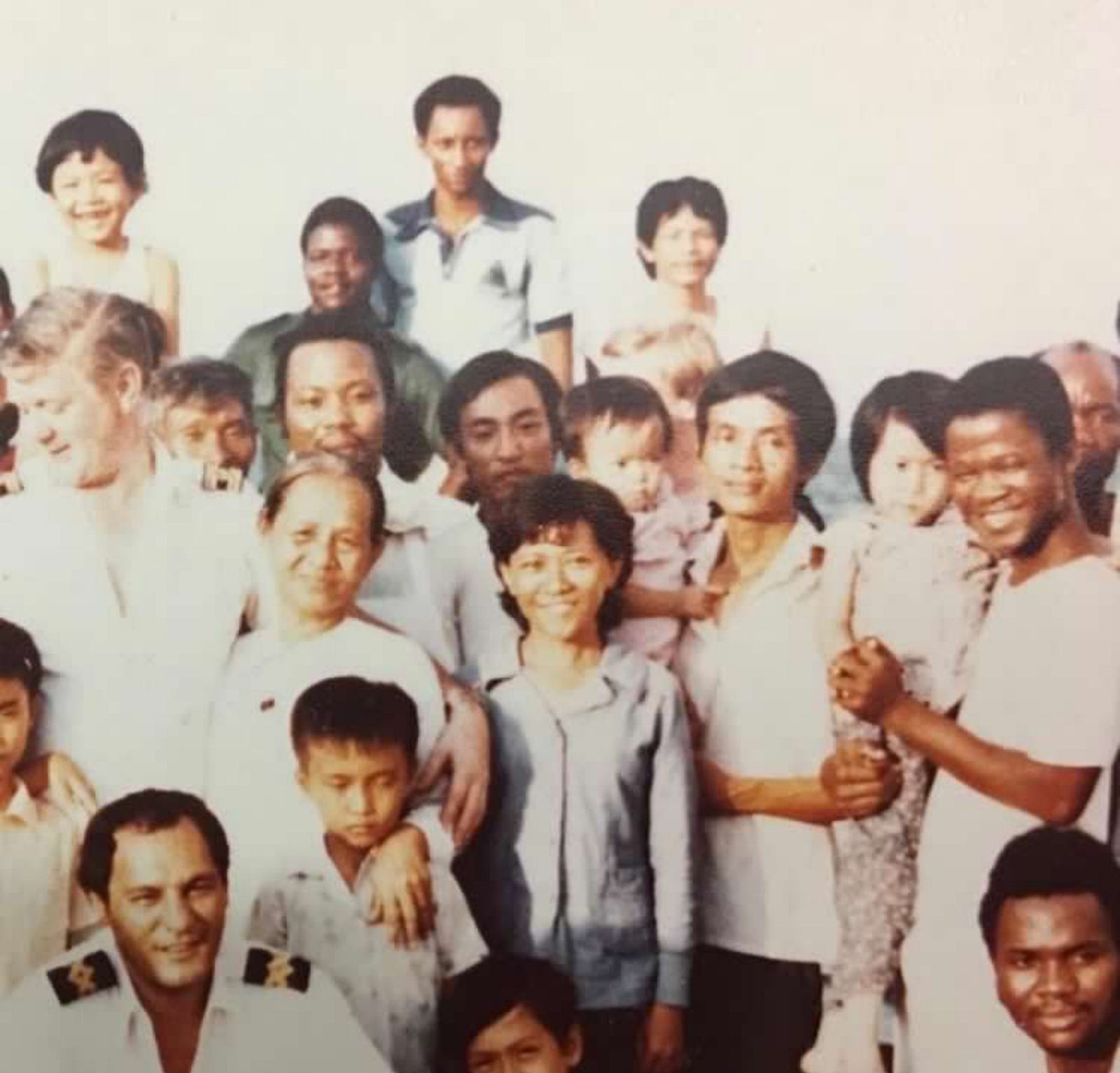
Not when the adults whispered late into the night. Not when I was passed quickly from one pair of arms to another. Not when we climbed into a wooden fishing boat with more than eighty people pressed tightly together, leaving Vietnam under cover of darkness.
She says I was quiet. Still. Easy.
She says that is part of why we didn’t get caught.
For years, I carried that story with pride. I was the baby who didn’t make trouble. The one who didn’t add weight to an already unbearable situation. But what I understand now, decades later, is that my nervous system made a decision long before I had language for it:
Stillness equals safety.
Silence equals survival.
We left on a boat built for far fewer bodies. More than eighty of us shared limited water, limited space, and no certainty about what would come next. We were at sea for fifteen days.
Fifteen days without modern navigation. Fifteen days scanning the horizon. Fifteen days of adults managing fear while trying not to let it spill onto their children. There were rumors of pirates. Engines that could fail. The constant possibility of being intercepted.
I do not remember the details the way the adults do. I remember it viscerally, I remember sensation. The heat against my skin. The uneven rhythm of the boat rocking. The way I was held tightly — not tenderly, but protectively.
Before I understood politics, I understood instability.
And when instability is your first teacher, you become exquisitely attuned to it.
As I grew older, that attunement looked like emotional intelligence. I could read rooms quickly. Sense tension before it surfaced. Anticipate conflict before it erupted. I learned how to perform competence early — how to stay ahead, stay prepared, stay composed.
Control felt like power.
If I could anticipate every shift, maybe I would never again feel that exposed.
Years later, I found myself in India studying embodied practices — meditation, breathwork, nervous system regulation. Not because my life was falling apart. From the outside, it looked impressive. I was leading, achieving, building credibility. But something underneath still felt braced.
I could command a room. I could argue persuasively. I could lead teams through complexity. Yet inside, there was vigilance — the same scanning reflex that had once kept me quiet on a boat in open water.
That was the turning point.
I began to see that silence is not the same as steadiness. Hyper-competence is not the same as security. Control is not the same as power.
Those were adaptive strategies. Brilliant ones. They helped me survive and succeed. But they were built on fear.
Real power, I discovered, feels different in the body.
It is not rigid.
It does not rush.
It does not grip.
It regulates.
Today, I work as a mediator and executive coach, facilitating conversations where disagreement runs deep — in executive teams, in communities, across political divides. In my work with Braver Angels, I sit with Americans who profoundly disagree and help them remain in dialogue without dehumanizing one another.
And what I see, over and over again, is this:
•The loudest person in the room rarely holds the most influence.
•The most dominant voice is not the axis the room orients around.
•The person who can stay regulated under pressure — that is who people trust.
•The one who can tell the truth without aggression.
•The one who can remain steady without collapsing.
•The one who does not need to force.
That is power.
For me, reclaiming power meant unlearning the belief that taking up space was dangerous. It meant teaching my nervous system that visibility does not equal threat. It meant discovering that steadiness is not silence — it is presence.
We survived fifteen days at sea.
But survival was only the beginning.
The deeper work has been learning that true power is not the absence of fear, nor the mastery of control. It is the capacity to remain grounded when the waters are unpredictable — and to help others feel steadier simply because you are there.
That kind of power cannot be forced.
It is felt.