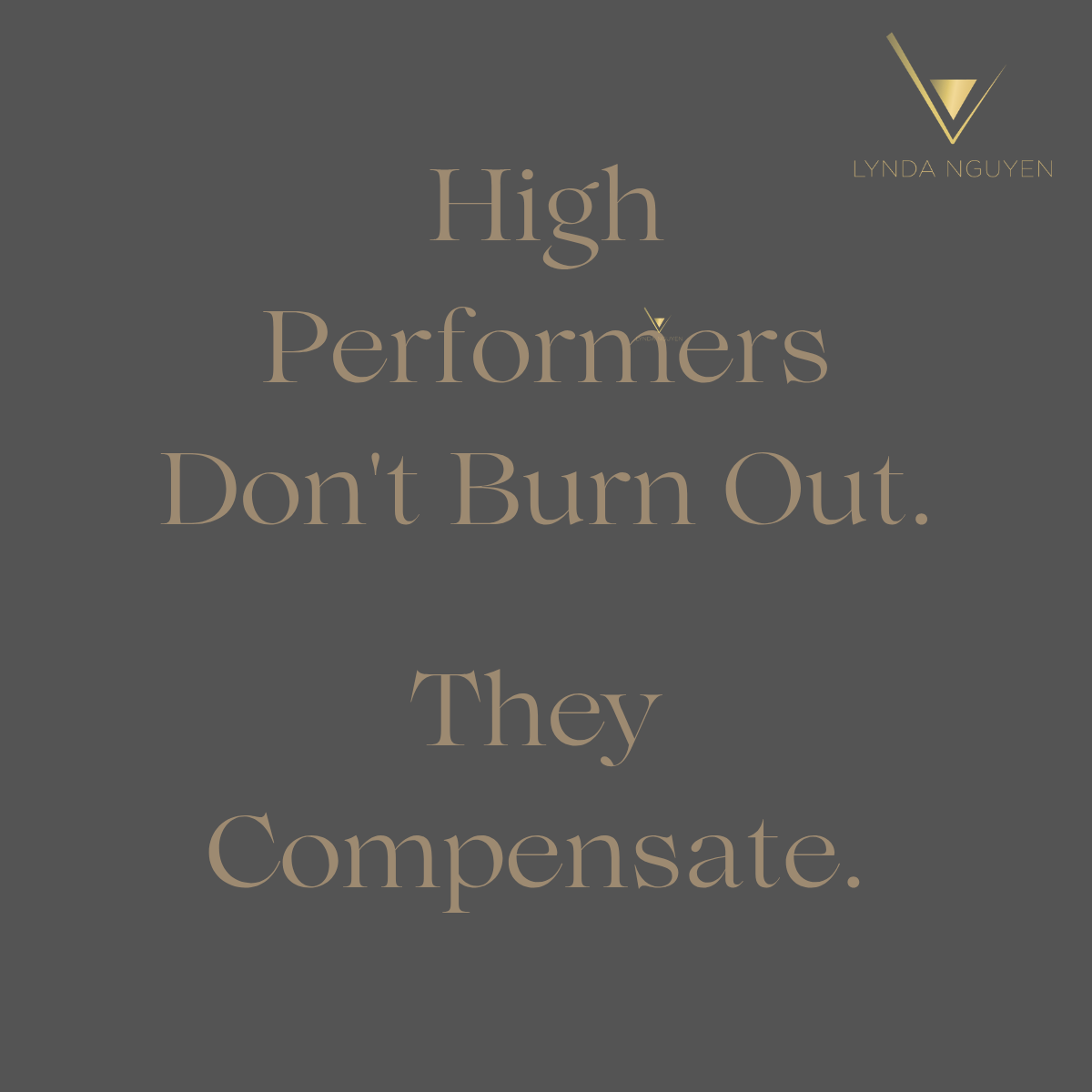

Your high performers aren’t burning out. They’re compensating.
I worked with a leader everyone trusted. If something was unclear, she clarified it. If a decision stalled, she moved it forward. If tension showed up, she absorbed it and kept things on track. On paper, she looked like a high performer. In reality, she was holding together a system that wasn’t clear on ownership, priorities, or how decisions were supposed to move.
Because she was good at it, no one questioned it.
That’s the pattern I keep seeing.
What gets labeled as burnout is often something else: sustained over-responsibility in an environment that hasn’t defined how work actually flows. You can usually spot it early, not through performance reviews but through behavior. The same people get pulled into everything. They become the default decision-maker even when it’s not their role. They’re the ones people go to when something feels off, unclear, or stuck.
They don’t escalate. They absorb. They don’t wait. They figure it out.
For a while, it works. Projects move. Teams feel supported. Leaders feel reassured. But underneath that, the system starts reorganizing around the person instead of fixing itself.
Research on role clarity and job design has shown that when ownership is ambiguous and expectations are diffuse, high performers don’t slow down. They stretch. They fill gaps. Over time, that behavior becomes normalized, and the organization begins to depend on it.
That’s where the risk builds.
•Decisions start to bottleneck, not because people aren’t capable, but because others defer
•Standards become inconsistent depending on how involved that person is
•Accountability blurs because ownership was never clear to begin with
From the outside, it still looks like a strong team. From the inside, it feels heavy.
Most organizations misread the signal. They see a high performer under pressure and respond with more support, more resources, sometimes even promotion. But the issue isn’t capacity. It’s design.
There’s another layer that rarely gets named. Many of these high performers aren’t just executing and deciding. They’re regulating the environment. They’re diffusing tension in meetings, reading what’s not being said, adjusting how they communicate to keep things moving. That emotional labor compounds the load.
So you end up with one person carrying execution, decision-making, and relational stability.
That’s not sustainable.
If you want to shift this, the move isn’t to protect your high performers. It’s to remove the conditions that require compensation in the first place. That means getting precise about who owns which decisions, what “good” looks like, how quickly decisions should move, and what happens when something is unclear. It also means leaders modeling this in real time, especially under pressure, because that’s when patterns lock in.
If your best people are carrying the system, the system isn’t working. And at some point, they stop carrying it.